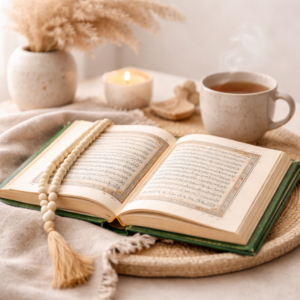
You Are Allowed to Feel, to Pause, to Heal
As Muslim women, we are often asked to carry everything emotions, duties, expectations—wrapped in quiet strength. And when your soul whispers that it’s tired, a louder voice often replies:
“Am I being selfish?”
“Other women handle more.”
“I should be stronger.”
But caring for your mental health isn’t selfish. It’s not a detour from faith. It is faith in action.
This guide shows you how to tend your emotional and mental well-being without guilt rooted in Islam, wrapped in mercy, and built on the truth that Allah never asked you to neglect yourself.
Why Mental Health Is Part of Your Deen
The Prophet ﷺ felt deeply. He experienced grief, fatigue, reflection, and stillness. He didn’t hide his humanity. He didn’t weaponize strength. He rested, withdrew when necessary, and returned with clarity.
Those were not lapses. They were examples.
Mercy begins with the self. The balance he modeled wasn’t weakness—it was wisdom. When you honor your heart, you’re following that example.
If you want to start gently, tonight after Maghrib: write three things you’re grateful for, recite an ayah of remembrance, and spend two minutes breathing slowly, saying:
- Inhale: SubhanAllah
- Exhale: Alhamdulillah
- Pause: La ilaha illa Allah
This small evening ritual reconnects you to your heart and your Creator.
Islamic Evening Routine for Emotional Calm
5 Faithful Ways to Nourish Your Mental Health as a Muslimah
These aren’t mere wellness tips—they’re spiritual practices. Each one is inspired by the Prophet ﷺ, grounded in Qur’anic mercy, and designed for soft-hearted, strong women seeking peace.
1. Begin with Gentle Remembrance: Reclaim Your Evenings
Before the noise of tomorrow arrives, give your heart a moment of stillness. Evening dhikr, gratitude reflection, and a short du’a reset your internal compass.
Micro-challenge: Tonight, spend five minutes writing, “Today, Allah gave me…” and say a brief du’a for ease.
Prophetic Practices for Self-Compassion
2. Set Boundaries Without Shame — It’s Sunnah
You are not a bad Muslimah for saying no. The Prophet ﷺ protected his time, honored rest, and didn’t carry every burden placed on him. When you protect your mental space, you are following that prophetic example.
Script example:
“I’m saying no to this request so I can be fully present in my worship and my family.”
Micro-challenge: Choose one area this week to say no to, and say it with compassion.
Creating Faithful Boundaries in Relationships
3. Calm the Mind with Dhikr and Breathwork
When thoughts crowd your heart, return to the rhythm of your breath and remembrance.
- Inhale slowly: SubhanAllah
- Exhale gently: Alhamdulillah
- Pause in stillness: La ilaha illa Allah
This simple cycle soothes the nervous system and pulls your focus toward your Lord. Pair it with a gentle halal skincare ritual washing your face with intention, feeling the water as a blessing, reciting a short du’a for renewal.
4. Speak to Yourself with Mercy — Self-Compassion Is Ibadah
Your internal dialogue carries weight. Harshness isn’t devotion. Mercy is.
Replace:
“I’m failing.”
With:
“I’m learning. I’m healing. Allah sees my effort.”
Practice: Each morning, look in the mirror and say:
“Ya Allah, guide me with gentleness today.”
Micro-challenge: Write one compassionate sentence about yourself before sleep and thank Allah for the effort you made.
5. Take Breaks Without Explaining Yourself Rest Is Divine Balance
“Indeed, with hardship comes ease.” (Qur’an 94:6)
You don’t have to earn ease. It’s promised. Rest isn’t a reward; it’s part of the balance Allah built into creation.
You are not lazy. You are aligning.
Micro-challenge: Schedule a 15-minute “nothing” break—no productivity, no explanation. Honor it like a small salah in your day.
The Guilt You Carry? It’s Not from Allah
That whisper that says “you’re not doing enough”, that pressure to push through pain, that internalized belief that rest is weakness—those are cultural echoes, not divine commands.
Myth vs. Truth:
- Myth: Rest means I’m weak.
Truth: Rest restores your ability to worship with clarity. - Myth: Saying no is selfish.
Truth: Protecting your time makes space for deeper presence.
You are not failing. You are human. Allah is Ar-Rahman—He doesn’t demand silent suffering. He invites ease, mercy, and balance.
Du’a for the Overwhelmed Muslimah
“Ya Allah, still my restless heart. Let me feel Your nearness when I feel alone. Replace my self-judgment with Your mercy. Grant me rest that restores, not guilt that corrodes. Remind me I am worthy in stillness. Ameen.”
“Rest is not a reward. It’s your right.” (pull quote)
You Deserve Peace Without Apology
Mental health for Muslim women is not indulgence. It is amanah. It is ibadah. It is healing aligned with deen.
So:
- Take the break.
- Say the du’a.
- Cry in sujood.
- Protect your space.
- Breathe with remembrance.
- Let softness lead strength.
You were never meant to carry it alone. You don’t have to anymore.
Community prompt:
What’s one small way you gave yourself mercy today?
Share below your story might give someone else permission to heal
Frequently Asked Questions About Mental Health for Muslim Women
Is taking care of my mental health allowed in Islam?
Yes. Islam recognizes emotional well-being as part of the deen. The Prophet ﷺ expressed grief, rested, and modeled balance so caring for your heart and mind is both allowed and beloved.
How can I care for my mental health in a way that’s Islamic?
Through faith-aligned practices: dhikr, breathwork, compassionate self-talk, setting healthy boundaries, intentional rest, gratitude journaling, and seeking halal-support like therapy when needed.
Guide to Halal Therapy and Emotional Support
Is therapy halal for Muslim women?
Yes. Therapy is halal when it supports healing and aligns with Islamic values. Seeking help is a means Allah may use to bring ease—not a sign of weakness.
Why do I feel guilty for resting or setting boundaries?
Guilt often stems from cultural conditioning, not from Islam. The Prophet ﷺ modeled mercy toward self, balanced action with rest, and protected his time. Boundaries and pauses are spiritual stewardship.
What are simple faith-rooted self-care practices I can start today?
Replacing harsh self-talk with mercy phrases
Nightly dhikr + gratitude reflection
Gentle morning affirmation (“Allah sees my effort”)
A 15-minute unassigned break
Saying no to one draining obligation